

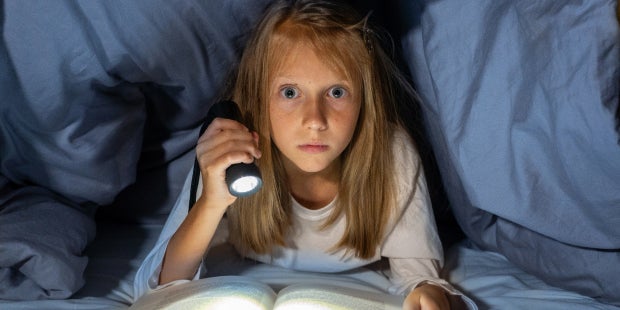
The year-round appetite for scary stories among young readers continues to grow. This Halloween, the PRH Consumer Insights team delves deeper into the cultural forces behind this trend, asking: Why is horror having such a powerful moment?
Research in this report draws on our proprietary Children’s Media & Brand Tracker (fielded March to April 2025). In this study, we found that one in four eight- to twelve-year-olds in book-buying families enjoys reading horror or “scary” books, according to their parents. What’s more, this genre is twice as popular among eleven- to twelve-year-olds (34 percent) as among eight- to ten-year-olds (17 percent), pointing to increasing resonance as kids get older.
Here’s what we found…
1. Horror thrives during uncertain or unstable times: Dr. Steven Gerrard, a scholar of horror cinema, says that horror provides a necessary psychological outlet during periods of societal instability: “Horror allows us to confront our anxieties in a controlled space, where the boundaries between reality and fiction are firmly drawn” (Dazed).
2. Horror resonates with people in distress:Younger generations are more likely than older generations to watch scary movies (according to a global survey from Prime Video) and younger generations also struggle more with mental health and loneliness—possibly giving insight into why they are a key demographic for horror:
- In this year’s World Happiness Report, the U.S. saw a new low in happiness, driven in part by young people “feeling less supported by friends and family, less free to make life choices, and less optimistic about their living standards.” Also, higher levels of anxiety from Gen Z may be why they are such big fans of horror (Forbes).
3. Subgenres mirror society’s evolving fears. Today’s horror reflects cultural anxieties on multiple fronts:
- Folk horror (Starve Acre, Midsommar) explores fears of the loss of nature and alienation from community and tradition.
- Body horror (The Shrouds, Alien: Romulus) taps into anxieties about technology and societal beauty standards.
- “Femgore” focuses on bodily autonomy, gender rights, and AI-driven fears like deepfakes (Daze, The Times, The Guardian).
4. Horror thrives on social media:As Canvas8 noted in 2023, “the genre is moving from the box office to social media, having a huge uptake on video-based platforms like TikTok and YouTube,” where horror “stands out and grabs attention.”
- Jessica Balanzategui, a professor who researches horror and digital cultures, wrote about the genre’s ongoing success on social media: “Social media platforms TikTok and YouTube are driving some of the most cutting-edge trends in horror filmmaking.” She highlights how these platforms inspire “participatory experimentation,” where fandoms actively contribute to the creation and evolution of horror content. (RMIT University).
5. Horror often reflects themes of “coming of age” or “loss of innocence” that may resonate with teens, especially considering the life-changing events they’ve experienced during their formative years. When promoting your titles, consider connecting these universal teen experiences to insights that reflect the realities young people face today.
6. Horror viewing is multigenerational (backing up other general trends we’ve seen about increasing family co-viewing during the pandemic): From a study by Sage Outcomes for Blumhouse:
- “As for when horror fans first fell in love with the genre, 52% started watching scary movies before age 12. 42% of Millennials and 30% of Gen Z participants said they first got into horror after being introduced to the genre by a family member” (reported in Variety (2024)).
- Among self-identified horror fans: 70 percent of Gen Z respondents reported watching horror movies with their moms while 65% have watched them with their fathers.
7. Teens’ 1980s/1990s/2000s nostalgia plays a strong role in the resurgence and revival of horror tropes and characters:
- Wednesday is the most popular global English show of all time at Netflix, overtaking another nostalgia-driven Netflix original, Stranger Things.
- Generational “Scream Queens”of the genre
- Younger generations getting exposure to nostalgic classics like the Goosebumps revival or more recent remakes such as I Know What You Did Last Summer
8. From a transmedia perspective, horror-film memes or popular cross-category success make the genre more accessible to younger audiences.
- 2023 was a launchpad for memeable or transmedia horror targeted toward Gen Z/TikTok and reaching younger audiences (M3GAN’s launch in 2023 via Hollywood Reporter,video game adaptation Five Nights at Freddy’s PG-13 rating making it a horror movie that crossed generational appeal via NBC).
Elle Een is Senior Analyst, Consumer Insights at Penguin Random House.